Why you cannot tell by looking
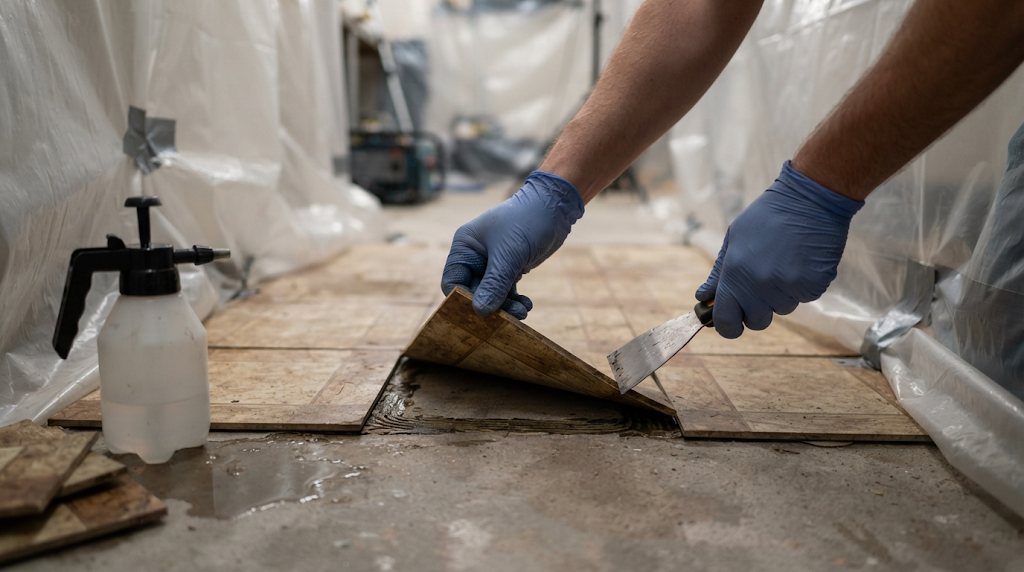
Asbestos fibres are far too small to see, and asbestos-containing materials look much like their non-asbestos equivalents. Textured ceiling coatings, vinyl floor tiles, cement sheets, soffit boards, pipe lagging and boiler flue sections can all contain asbestos or not, and nothing on the surface tells you which. Colour and age are only clues. The safe approach is to treat any suspect material in a pre-2000 building as asbestos until a laboratory says otherwise.
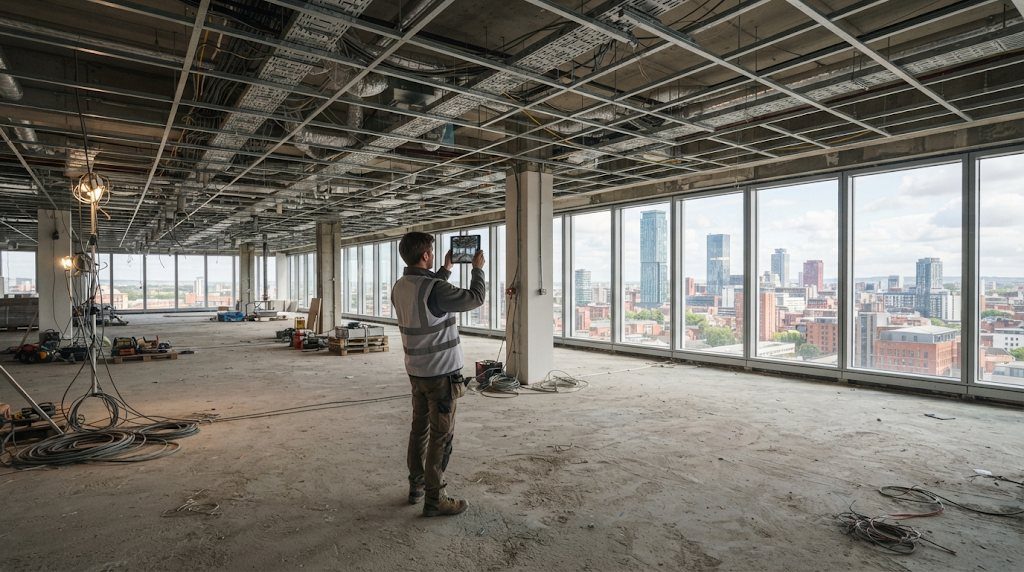
Sampling is a good fit if you have one or two specific items you are worried about, such as a garage roof, a damaged ceiling, or a boiler cupboard, and do not need a whole-building survey. It is also used as part of surveys, to turn a presumption into a confirmed result.
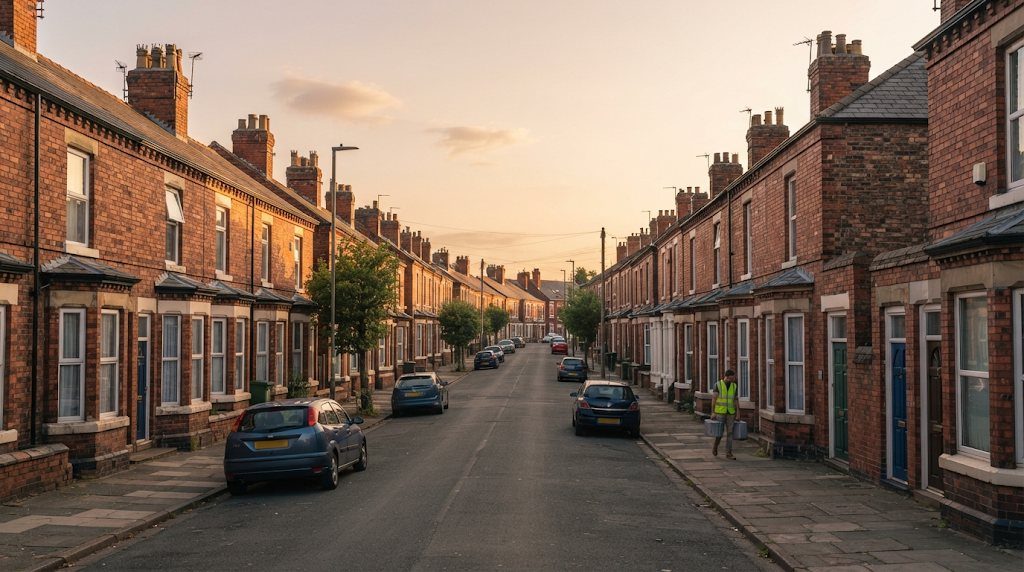
Typical items to sample in Greater Manchester include textured ceilings in 1930s semis and post-war estates, cement garage roofs in places like Sale, Bolton and Wigan, and flue pipes and boiler cupboards in terraced houses.
How a sample is taken
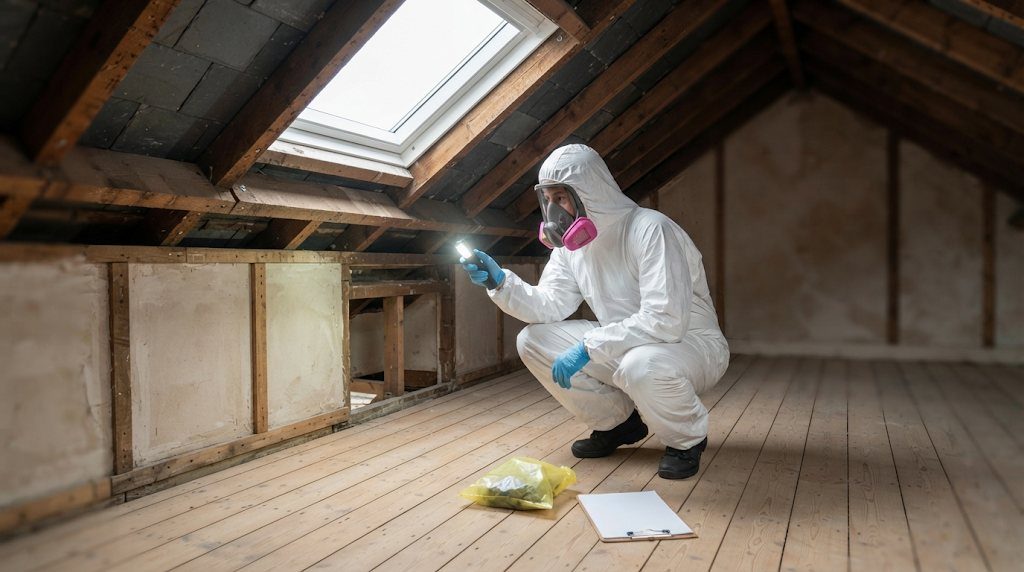
A trained surveyor takes a small bulk sample, with the material damped first to keep fibres down, using protective equipment and a method that avoids spreading dust. The sample goes into a sealed, labelled bag, and the spot sampled is sealed or made good. Please do not take your own samples: disturbing a damaged material is the very thing that releases fibres.
The laboratory identifies asbestos in bulk samples by polarised light microscopy, with dispersion staining, following the HSE method set out in HSG248. HSE guidance expects the laboratory analysing samples to be accredited by the United Kingdom Accreditation Service, so ask any provider, including whoever we connect you with, to confirm this on the report.
Turnaround and results
Standard turnaround is typically a few working days, and many laboratories offer a faster option for an extra fee. The result tells you whether asbestos was found and which type: chrysotile (white), amosite (brown) or crocidolite (blue), or none detected. Each sample result is recorded against its location with a photograph, so the answer is clear and can be passed on to a contractor.
What to do with the result
If no asbestos is detected, you can proceed with the work. If asbestos is found, the answer depends on the material and its condition. Many materials in good condition and out of harm's way can be left, labelled and monitored. Others need to be sealed or removed before work, and some must be removed only by a licensed contractor. We can arrange a survey or connect you with licensed removal contractors for a quote if you need one.